On this page
A green laser pointer can be used as a small, controlled light source for long-exposure photography. It does not make a scene brighter to the eye, measure distance or guarantee a particular visible result. The product page lists a 532 nm beam, a Class 3R classification and output below 5 mW; those specifications should be checked on the actual label and instructions.
Plan the photograph before switching on
Choose a surface where the beam can remain under control. A matte wall, floor or object can show a line or dot without sending light toward people, windows, vehicles, aircraft or reflective surfaces. Check the venue rules and whether laser use is allowed at the location.
- Keep people, animals and cameras out of the beam path.
- Never aim into a lens, mirror, window or wet reflective surface.
- Use short, deliberate movement rather than sweeping the beam through an uncontrolled area.
- Keep the pointer away from children and follow the supplied operating instructions.
Camera setup for light trails
- Use a tripod and a remote release or timer.
- Start in manual mode with low ISO, a moderate aperture such as f/8 and a shutter time long enough to record the intended movement.
- Focus on the subject before the exposure, then switch to manual focus if autofocus hunts.
- Keep the beam path simple enough that the exposure remains repeatable.
- Review the frame and adjust exposure or movement rather than assuming a bright photograph proves the pointer's output or range.
Why a beam may be visible in a photograph
Fog, mist, dust and rain can scatter light toward the camera and make part of the beam visible. A photograph may also show a line that was not clearly visible to the people present. These effects depend on the atmosphere, camera settings, angle and surface; they are not a controlled visibility test.
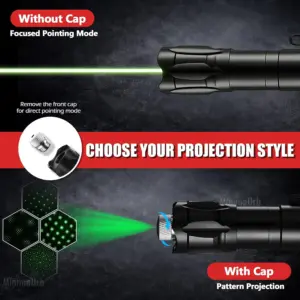
The removable pattern cap changes the shape of the projected light. It does not turn the pointer into a calibrated projector or measurement device. Check the cap is fitted according to the instructions before making an exposure.
What the image does not prove
A vivid photo is not proof of a guaranteed range, lawful use in every location, eye safety, or suitability for rescue signaling. Do not use a photo as evidence that another person will see or recognize a beam at a particular distance.
For the distinction between physical and on-screen pointing, see laser pointer versus presentation remote. For current kit details, review the MinimaUrb product page.