Beyond the Classroom: Why Outdoor Tour Guides Rely on High-Visibility Green Lasers
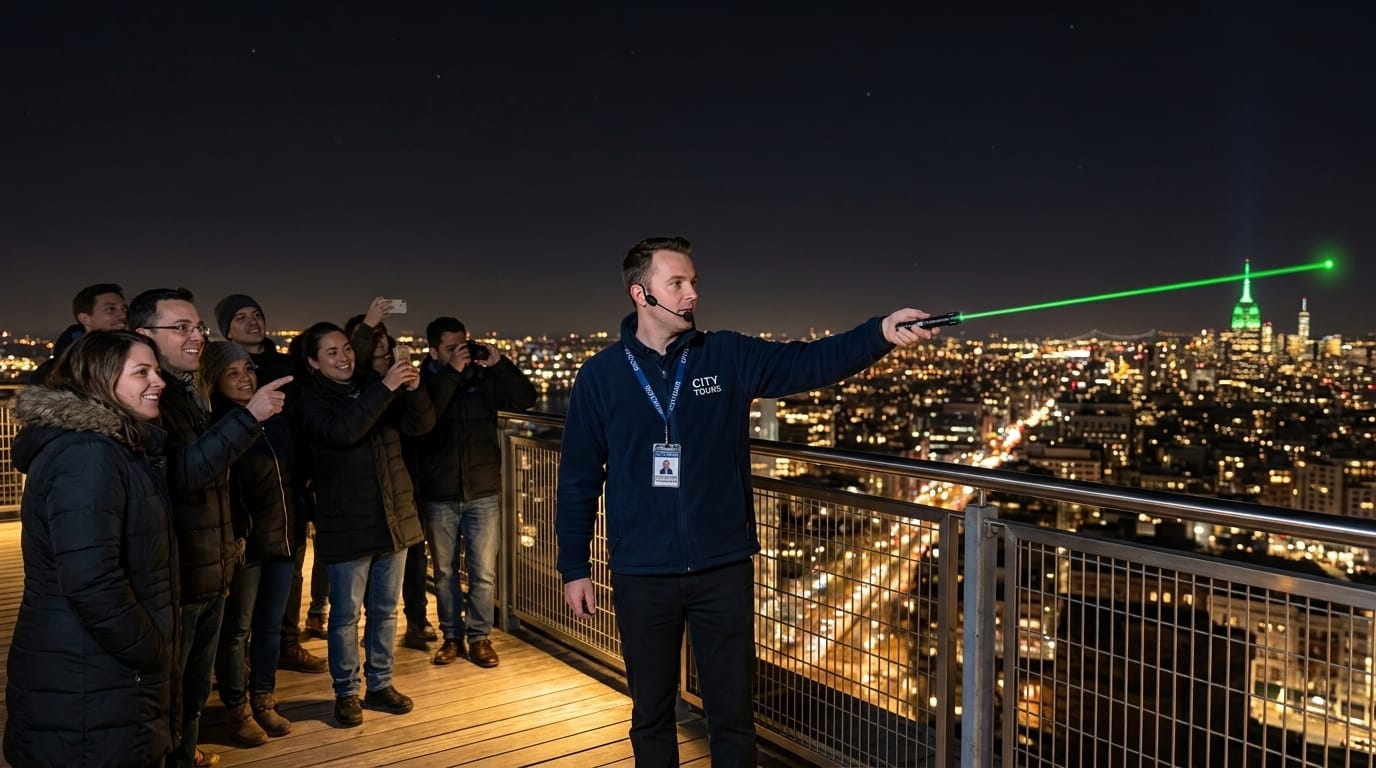
Leading a group of tourists through a sprawling historic site, a dense nature reserve, or a massive underground cavern comes with a unique set of challenges. Chief among them: how do you draw the attention of 30 people to a specific, intricate detail located hundreds of feet away?
Pointing fingers and using vague descriptions like "look at that rock formation over there" simply don't work. For professional outdoor guides and educators, a high-visibility green laser has become an absolute necessity for seamless, engaging communication.
Think about the logistical reality of outdoor guiding for a moment. You are standing in a noisy plaza, competing with traffic, wind, and ambient chatter. Your guests are spread across a wide area, some wearing sunglasses, others distracted by their cameras. You need to direct their gaze to a precise architectural detail high on a cathedral facade—perhaps a gargoyle no larger than a basketball, perched 150 feet above street level. In this scenario, a pointed finger is invisible, a shouted description is lost in the wind, but a sharply defined green dot on that gargoyle is unmistakable and immediate. This is the power that modern green laser technology brings to the professional guide's toolkit.
1. Piercing the Daylight: The Green Wavelength Advantage
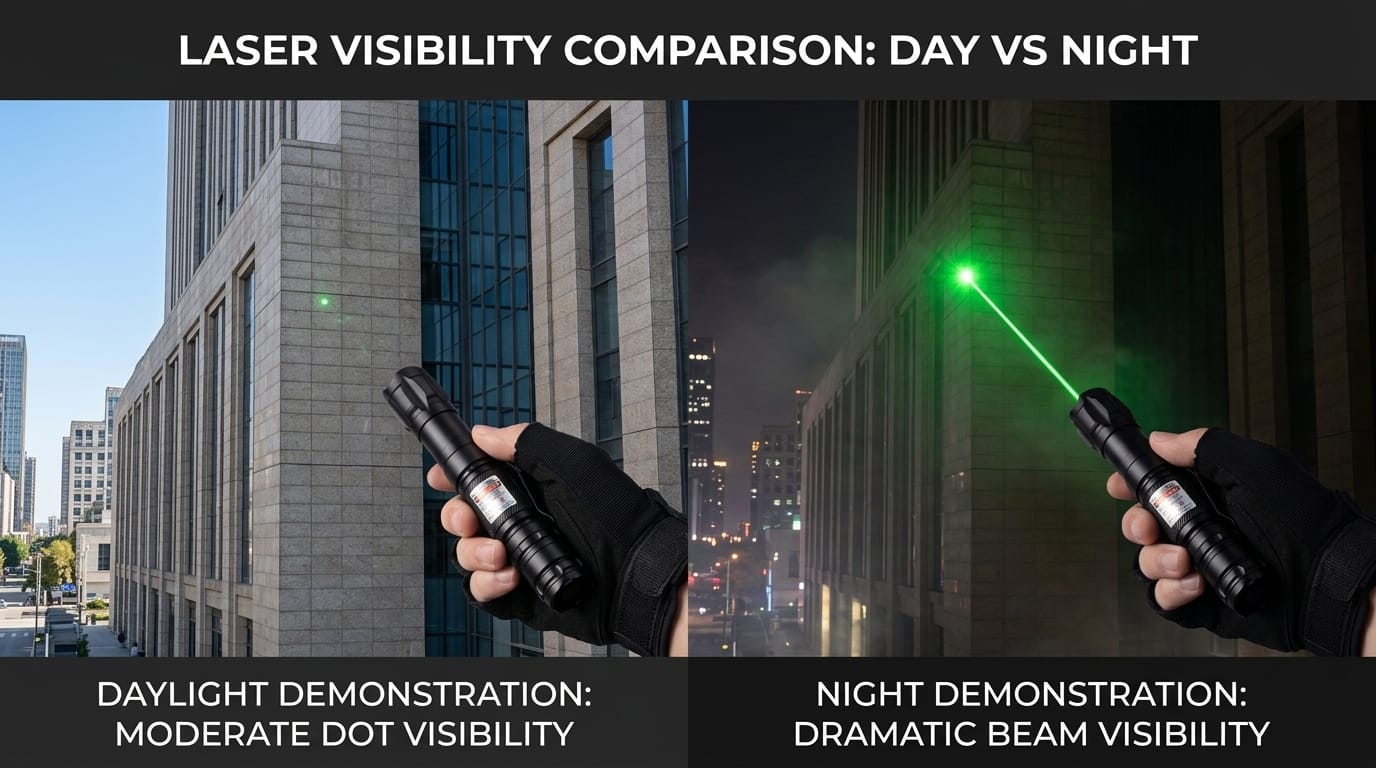
If you have ever tried using a standard red presentation pointer outdoors, you know it completely vanishes the moment it hits sunlight. However, outdoor guiding requires robust visibility.
A 532nm green laser operates on a wavelength that is approximately 50 times more visible to the human eye than a standard red beam. This scientific advantage means that even during bright afternoon tours, a tactical green laser can place a crisp, undeniable marker on distant architecture, cliff faces, or ancient ruins.
To understand why this advantage exists, we need to look at the human eye's photopic response curve. The human retina contains photoreceptor cells that are maximally sensitive to light at approximately 555 nanometers—almost exactly where the 532nm green laser sits. This is not a coincidence of engineering; it is a deliberate choice by laser diode manufacturers who understand that green light triggers the strongest neurological response in the human visual system. When your tour guests see that green dot appear on a distant object, their brains process it faster and more clearly than any other color you could project.
By contrast, red lasers operating at 650nm sit far lower on the sensitivity curve, requiring exponentially more power to achieve the same perceived brightness. Blue lasers at 445nm fare slightly better but still cannot match the sheer visual punch of green in daylight conditions. For guides working under the unforgiving Mediterranean sun or the bright desert skies of the American Southwest, only a quality 532nm green laser delivers consistent, reliable visibility across all lighting conditions.
2. From Ancient Architecture to Vast Caverns
The versatility of a long-range laser makes it the ultimate communication and teaching tool across various professional guiding environments:
- Architectural & City Tours: Effortlessly highlight intricate gargoyles, stained glass windows, or structural keystones on tall cathedrals without forcing your group to use binoculars.
- Cave & Spelunking Expeditions: In pitch-black caverns, the vivid beam acts as a physical pointer to illuminate delicate stalactites while ensuring tourists stay safely on the designated path.
- Wildlife & Safari Spotting: Safely indicate the location of camouflaged animals in dense foliage from a secure distance, ensuring the whole group spots the target without getting too close and disturbing the wildlife.
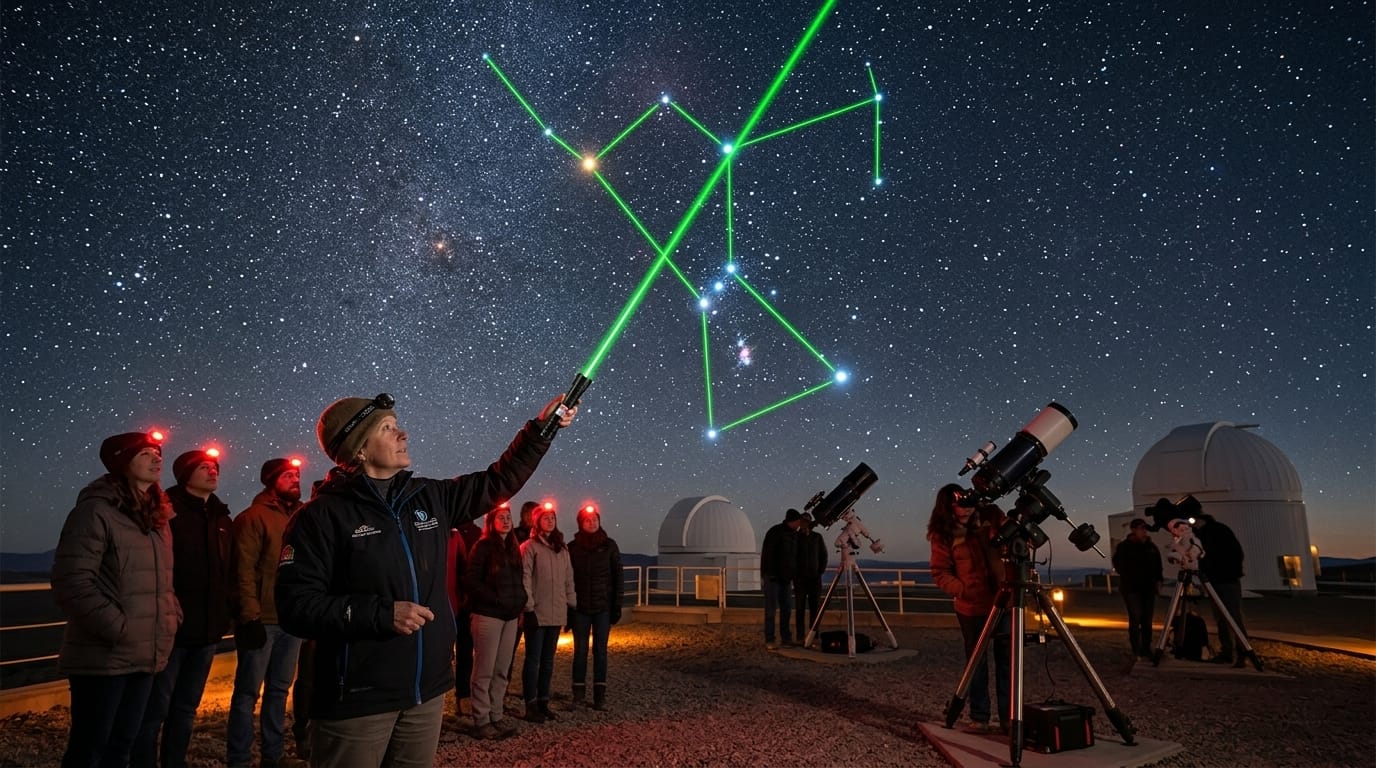
- Stargazing and Astronomy Tours: In dark-sky environments, a green laser beam appears to stretch all the way to the stars. Astronomy guides use them to literally draw constellations in the night sky, connecting stars with visible green lines that make celestial navigation intuitive and unforgettable for guests.
- Battlefield and Historic Site Tours: When explaining troop movements across expansive landscapes, guides can trace routes along distant ridgelines and hilltops, transforming abstract historical narratives into vivid, spatially anchored stories that guests can see and follow in real time.
- Botanical Garden and Arboretum Tours: When a rare blooming flower sits high in a canopy or a specific leaf is needed for identification, the laser eliminates the need for ladders, binoculars, or risky off-path excursions, keeping both guests and plant life safe.
Each of these applications shares a common thread: the laser transforms what would otherwise be a verbal abstraction into a concrete visual experience. When guests can physically see the exact spot you are describing, comprehension deepens, engagement increases, and the overall quality of the tour experience improves dramatically.
3. Professional Reliability When It Counts
Tour guides operate in unpredictable weather, which means cheap, fragile plastic toys will not survive the tourist season. Professionals require aerospace-grade aluminum construction and IPX4 water resistance.
Furthermore, a rechargeable tactical laser ensures that you won't be left fumbling for spare batteries in the middle of a crucial historical explanation or a wildlife sighting.
Battery life and power management deserve special attention when selecting a guide-grade laser. Leading tours back-to-back through a full eight-hour day demands a laser that can deliver consistent output without dimming. High-quality tactical lasers use regulated driver circuits that maintain constant brightness as the battery discharges, unlike cheaper unregulated pointers whose beam intensity fades noticeably after the first hour of use. The best units also feature battery level indicators—often an LED that changes from green to amber to red—so you know exactly when to recharge or swap cells between tours, eliminating the anxiety of unexpected power loss.
Durability testing is another key differentiator. A professional guide's laser may be dropped on cobblestone streets, exposed to salt spray on coastal tours, or covered in fine desert dust. Aerospace-grade 6061-T6 aluminum bodies with Type III hard anodizing resist corrosion and handle impacts that would shatter plastic pointers instantly. O-ring sealed battery compartments and switch assemblies protect internal electronics from moisture, while tempered glass lens covers prevent scratching that could diffuse the beam and reduce effective pointing range over time.
4. Enhancing Guest Engagement and the Psychology of Visual Pointing
There is a powerful psychological component to laser-guided touring that many guides overlook. When guests can immediately see exactly what you are referring to, the cognitive load of following your narration drops to nearly zero. They no longer need to mentally translate your words into visual search patterns—scanning facades, squinting, and guessing. The laser does the searching for them, freeing their mental bandwidth to absorb the historical, cultural, or scientific context you are providing.
This "cognitive offloading" effect has been studied extensively in educational psychology. When learners are required to visually locate a target while simultaneously processing verbal information, their comprehension and retention drop measurably. By eliminating the search phase with a precise green pointer, guides effectively increase the information retention of their guests—a direct contributor to those glowing five-star reviews and word-of-mouth referrals that sustain a guiding business.
Furthermore, the green laser serves as a natural attention anchor for groups that include children, elderly guests, or non-native speakers. Visual cues transcend language barriers, ensuring that international tourists, hearing-impaired guests, and young children all share the same clear focal point regardless of their ability to follow spoken commentary.
5. Choosing the Right Laser Specifications for Your Tour Type
Not all green lasers are created equal, and selecting the appropriate power level and feature set depends heavily on your specific guiding environment. For indoor or dimly lit tours—museum galleries, evening walking tours, or cavern expeditions—a modest 5mW to 30mW output provides more than sufficient beam visibility without overwhelming the ambient atmosphere of the space.
For bright outdoor environments—midday city tours, desert excursions, or tropical rainforest hikes—you will need a laser rated at 50mW or higher to maintain a clearly visible dot against sunlit surfaces. Many professional guides in these conditions opt for 80mW to 100mW tactical units, which produce a beam vivid enough to be seen easily at ranges exceeding 1000 feet even under direct sunlight.
Additional features worth considering include adjustable focus rings that allow you to widen the beam for broad-area indication or tighten it for extreme-distance pointing, key-lock safety switches that prevent unauthorized use when the laser is stored in your gear bag, and momentary-on pressure switches that enable brief, precise pointing without the risk of accidentally leaving the laser activated between uses.
The Verdict: The Ultimate Guide's Companion
Clear, immediate communication is the foundation of a highly-rated guided tour. By upgrading to a high-power green laser, you eliminate guest confusion, drastically enhance the educational experience, and keep your tour groups visually engaged from start to finish.
In a competitive industry where guest satisfaction directly determines your reputation and income, the green laser is not a gimmick—it is a professional tool that separates exceptional guides from merely adequate ones. Whether you lead architecture walks through Rome, wildlife safaris in Kenya, or astronomy tours under the desert sky, a quality tactical green laser will become the piece of gear you reach for on every single tour.
Upgrade Your Guiding Toolkit
Stop relying on vague pointing. Command attention and deliver unforgettable tours with our professional-grade, high-visibility green lasers.
Shop Professional Green Lasers