The Ultimate Survival Tool: Why Green Lasers are Crucial for Search and Rescue
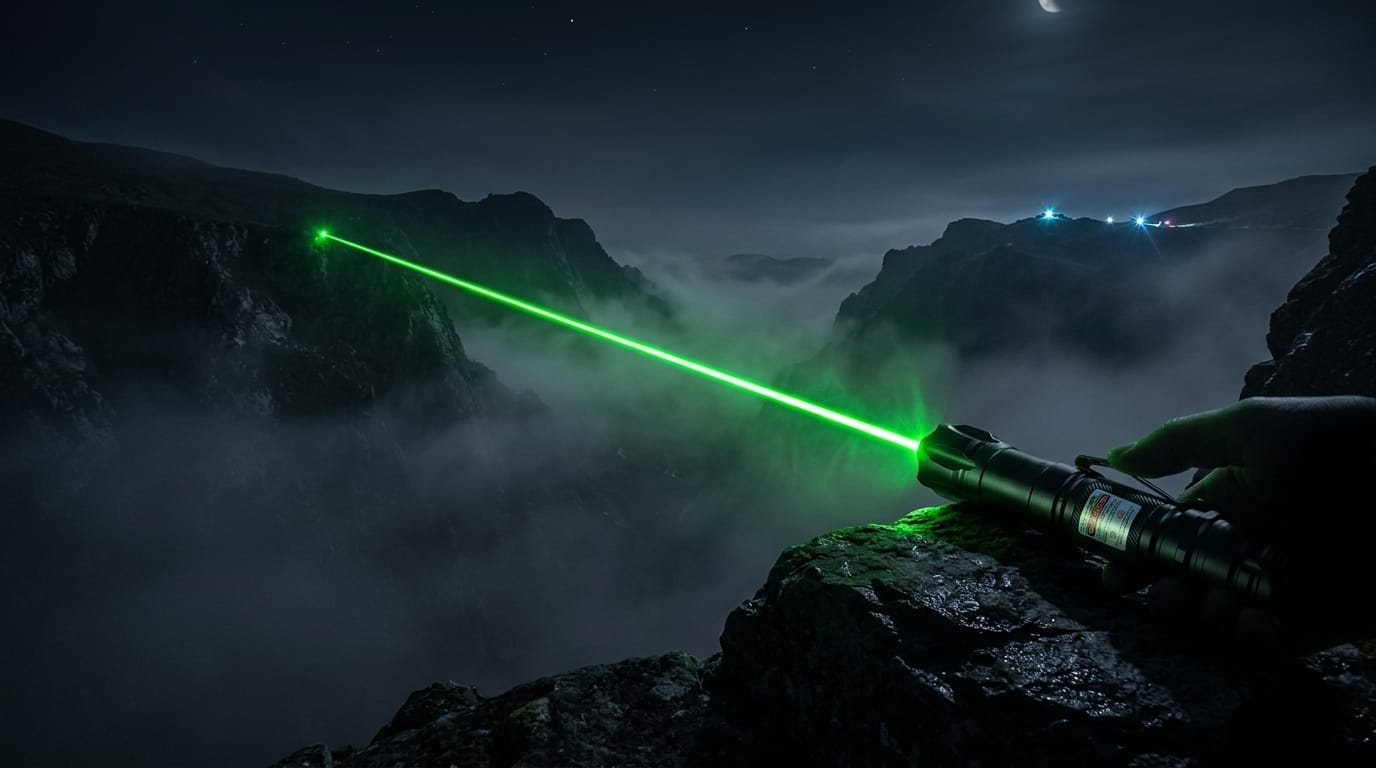
When you are lost in the deep wilderness, stranded on a mountain peak, or drifting at sea, your survival depends on one critical factor: getting noticed. Flares burn out in minutes, flashlights have a severely limited range, and cell phones quickly turn into useless bricks without a signal.
For modern outdoorsmen, mountaineers, and professional Search and Rescue (SAR) teams, a high-power tactical green laser has become a non-negotiable piece of emergency kit. It is the ultimate long-distance signaling device.
The statistics behind wilderness emergencies are sobering. According to the National Association for Search and Rescue, over 65,000 SAR missions are conducted annually in the United States alone, with the average search lasting 12 to 24 hours and costing tens of thousands of dollars in helicopter flight time and personnel deployment. In these critical windows, the difference between a successful rescue and a tragic outcome often comes down to a single, fundamental variable: how quickly and clearly the lost person can make their position known to searchers. A device that can project a visible signal across miles of terrain—day or night, through fog or clear air—dramatically compresses that rescue timeline.
1. Piercing the Distance: Unmatched Visual Range
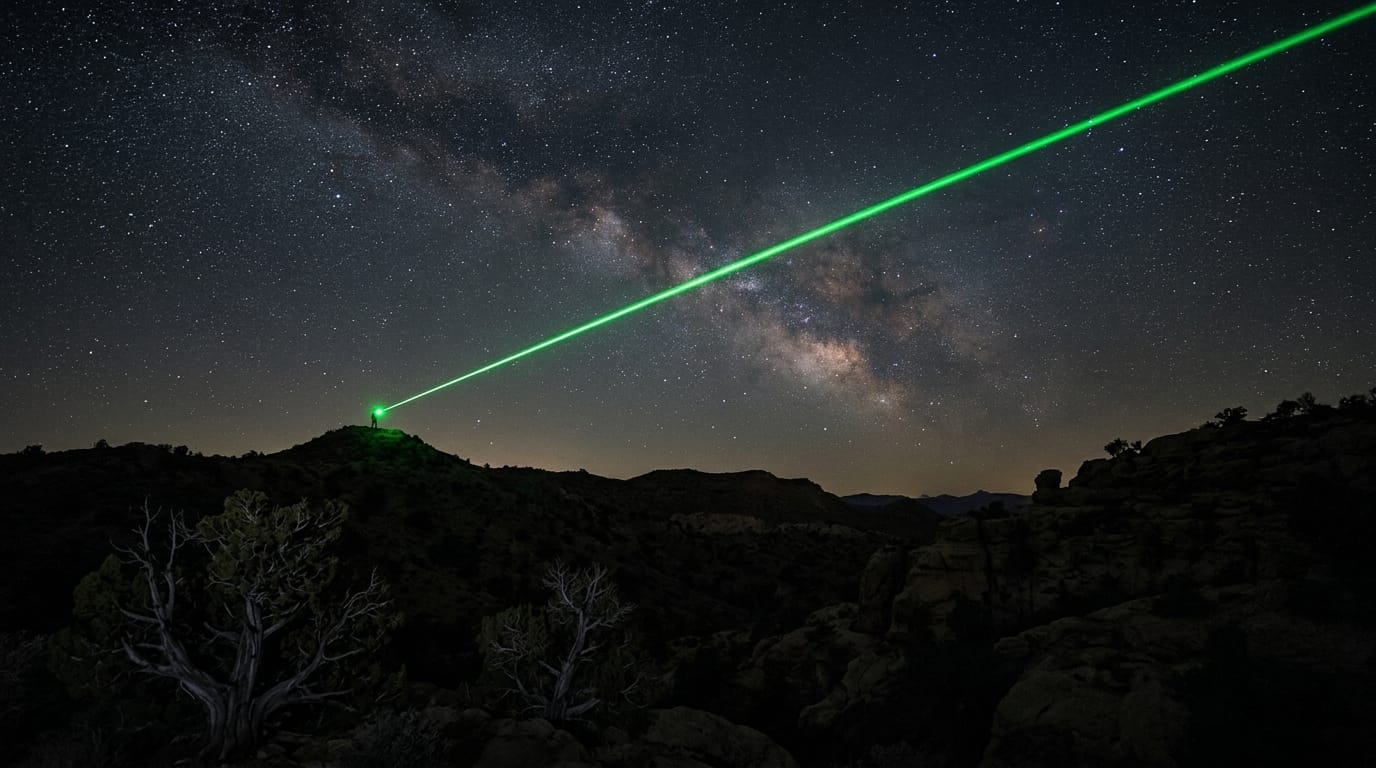
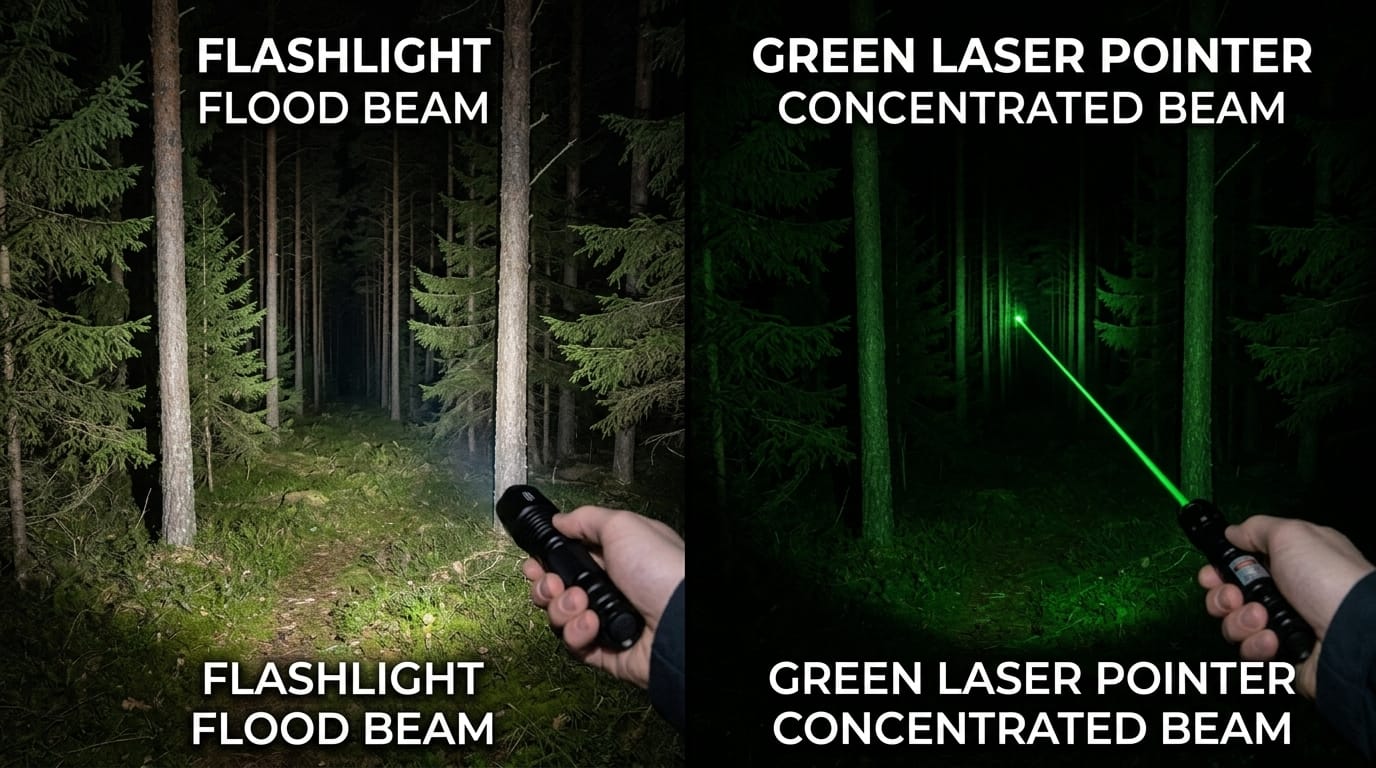
The core advantage of a 532nm green laser in a survival scenario is its extraordinary range. Unlike a flashlight that disperses light over a wide area, a laser beam remains tightly focused over immense distances.
At night, a high-output green laser beam is visible for miles. Even more importantly, the human eye is most sensitive to green light. This means a rescuer flying in a helicopter or scanning a ridgeline from a distant valley is vastly more likely to spot the vivid, unnatural streak of a green laser than a standard white SOS strobe.
To understand just how far a green laser can project, consider the physics of beam divergence. A quality tactical laser produces a beam that diverges at roughly 1.0 to 1.5 milliradians, meaning the beam diameter increases by only about one meter for every kilometer of distance traveled. At 5 kilometers—over 3 miles—the beam is still a tight, visible column of light no wider than a dinner plate. When that beam is swept across a dark landscape, the moving green point is visible to the human eye at distances where even high-powered searchlights dissolve into indistinct haze.
This range advantage is compounded by the fact that green laser light scatters strongly in the atmosphere. Even when the beam itself is not pointed directly at a rescuer, the column of scattered green light rising from your position creates a visible "beacon pillar" that can be spotted from any angle. Helicopter crews report that green laser signals are among the easiest emergency markers to identify from the air, cutting through ground clutter and natural terrain features with a clarity that white strobes and signal fires cannot match.
2. Tactical Applications in Emergency Scenarios
A rugged green laser serves multiple life-saving purposes when things go wrong in the backcountry:
- Aircraft Signaling: If you hear a rescue helicopter, flashing the laser across the tree canopy or the ground near the aircraft (never directly at the cockpit to avoid blinding the pilot) creates an unmistakable, massive visual marker pointing to your location.
- Penetrating Fog and Smoke: Green lasers exhibit intense Rayleigh scattering. In misty, foggy, or smoky conditions where flashlights just create a blinding wall of white light, a green laser beam cuts through, creating a solid "lightsaber" effect that highlights your exact position.
- SAR Team Coordination: For the rescuers themselves, high-power lasers are used to silently point out paths, identify hazard zones across ravines, and coordinate ground movements without relying on radio descriptions.
- Night Navigation: When lost and attempting self-rescue, a green laser can be used to probe distant terrain features—checking whether a slope is navigable, identifying water reflections, or marking a safe route through hazardous ground—without needing to physically traverse dangerous terrain first.
- Riverside and Coastal Rescue: In water-based emergencies, the green beam's ability to reflect vividly off water surfaces provides an additional signaling dimension. Sweeping the beam across the water creates a strobe-like effect visible to boat crews and Coast Guard vessels that is far more eye-catching than any handheld flashlight.
- Ground-to-Ground Search Patterns: When SAR ground teams are operating within visual range of each other, lasers serve as silent, precise communication tools. A team leader can outline search sectors, mark points of interest, and coordinate team movements across valleys and ridgelines without shouting or relying on potentially unreliable radio signals in mountainous terrain.
Each of these applications shares a common advantage over traditional signaling methods: the laser works without consumables. A flare burns for seconds or minutes and then is gone. A flashlight drains its batteries within hours. But a green laser, powered by a rechargeable lithium-ion cell and used in brief signaling bursts, can provide signaling capability for days or even weeks of intermittent use—a potentially critical factor in extended survival scenarios.
3. The Importance of Rugged Construction
A survival tool is only good if it survives the disaster with you. When packing a laser for backcountry emergencies, standard office pointers will fail. You require a device built from aerospace-grade aluminum, featuring robust O-ring seals for water and weather resistance.
Furthermore, lithium-ion battery compatibility ensures your laser can hold its charge in freezing temperatures, ready to deploy the moment you need it most.
Impact resistance is equally critical. In a genuine emergency—a fall on loose scree, a sudden immersion in a river crossing, or days of being jostled inside a pack during an extended trek—your signaling device must withstand punishment that would destroy consumer electronics. Military-grade tactical lasers undergo drop testing from heights of 1.5 meters onto concrete, sustained immersion testing at depths of 1 meter for 30 minutes, and thermal cycling between extreme cold and heat. These are not excessive specifications for a survival context; they are the minimum standard for equipment that your life may one day depend upon.
Battery chemistry deserves careful consideration in cold-weather environments. Standard alkaline batteries lose significant capacity below freezing, and their voltage sag under load can render a laser dim or inoperable precisely when you need it most. Lithium-ion cells, particularly those based on lithium iron phosphate chemistry, maintain consistent output across a much wider temperature range. The best survival lasers use 18650 or 21700 lithium-ion cells, which are compact, energy-dense, and widely available—meaning you can carry spares without adding significant weight to your pack.
4. Laser Signaling Protocols and Morse Code Techniques
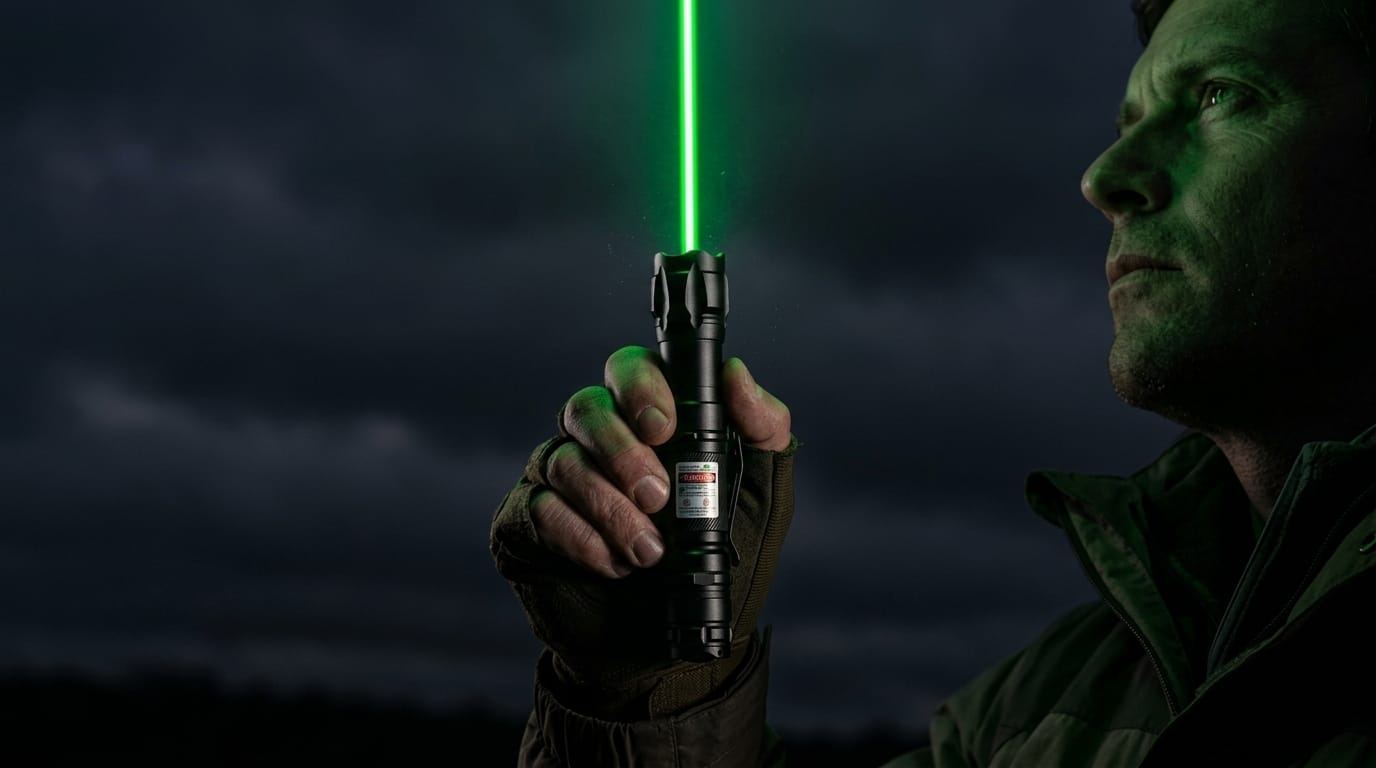
Simply owning a green laser is not enough; you must know how to use it as a signaling instrument. The international distress signal SOS—three short flashes, three long flashes, three short flashes—is universally recognized and should be the first pattern you commit to muscle memory. Practice the timing in a safe, controlled environment until you can execute it smoothly, even when cold, tired, and stressed.
Beyond SOS, more sophisticated signaling protocols exist. The standard ground-to-air emergency response involves sweeping the laser in a slow, deliberate circle on the ground around your position, then pointing it directly upward in a steady vertical beam. This combination—a visible circle on the ground for close-range identification and a vertical pillar for long-range beaconing—maximizes detectability from both ground and aerial search platforms.
For communication with an aircraft that has already spotted you, a simple binary system works: one long flash for "yes" or "acknowledged," two short flashes for "no" or "negative." This allows you to answer basic questions from a rescue pilot—"Are you injured?" "Is the landing zone clear?"—without needing any radio equipment. Practice these protocols with a partner before heading into the backcountry; in a real emergency, the cognitive load of remembering signaling procedures compounds with the stress of the situation itself.
5. What SAR Professionals Say About Green Lasers
The growing adoption of green lasers in professional SAR operations is backed by field experience. SAR team leaders consistently cite three factors that make lasers superior to traditional signaling methods: range, battery endurance, and weather penetration. "A signal mirror is great in direct sunlight, but useless at night or in overcast conditions," explains a 15-year veteran of a Rocky Mountain SAR team. "A green laser works in all of those conditions, and it works from miles away. For us, that means finding people faster, which directly correlates to better outcomes."
Helicopter pilots involved in SAR operations are particularly enthusiastic about laser signals. Unlike signal fires, which can look similar to campfires or controlled burns from altitude, or white strobes, which blend with vehicle headlights and industrial lighting, a green laser beam has an unmistakable visual signature. "When I see that green column rising from a ridgeline, I know immediately that I'm looking at a deliberate distress signal, not random background light," reports a Coast Guard helicopter pilot with over 2,000 rescue flight hours.
SAR dog handlers have also found creative applications for green lasers in training and field operations. The laser can be used to direct a search dog's attention toward specific terrain features from a distance, or to mark a found subject's location for aerial extraction teams without disturbing the scene. These secondary applications underscore the versatility of a tool that, at its core, is simply a highly focused beam of visible light.
6. Building Your Complete Emergency Signaling Kit
A green laser should be the centerpiece of your emergency signaling kit, but it works best when complemented by redundant, multi-layered signaling options. Your complete kit should include the laser itself (with at least one fully charged spare battery), a signal mirror for daytime use when conserving laser battery is prudent, a high-decibel whistle for close-range audio signaling, and a compact, waterproof LED strobe as a hands-free backup that can run for hours on a single charge.
Storage and accessibility matter as much as the gear itself. Your laser and signaling kit should live in an exterior pocket of your pack or in a dedicated pouch on your belt or chest harness—never buried deep in your main compartment where you cannot reach it quickly. In a fall or injury scenario, you may have only one functioning arm; your signaling gear must be accessible with either hand and operable with minimal fine motor control. Practice retrieving and activating your laser blindfolded or with your non-dominant hand until the motions become automatic.
Regular maintenance checks are essential. Before every trip, verify that your laser produces a clean, bright beam, that the battery is fully charged, that the O-rings are lubricated and free of debris, and that the switch operates smoothly. A laser that has been sitting unused in a pack for months may have a depleted battery or moisture-damaged contacts. Five minutes of pre-trip inspection can prevent the devastating discovery that your primary signaling device has failed when you need it most.
The Verdict: Don't Go Off-Grid Without One
Nature is unpredictable, and carrying the right signaling gear can quite literally be the difference between life and death. A tactical green laser is lightweight, compact, and provides an unparalleled method of drawing attention across vast, hostile landscapes.
In the hierarchy of survival priorities, signaling ranks just behind shelter, water, and fire—and ahead of food. A green laser addresses this priority with a combination of range, reliability, and operational simplicity that no other single signaling device can match. Whether you are a weekend backpacker, a dedicated mountaineer, or a professional SAR responder, this compact tool deserves a permanent place in your emergency kit. When the moment comes that you need to be seen, nothing says "I am here" across the miles quite like a beam of brilliant green light.
Prepare for the Unexpected
Equip your bug-out bag or hiking pack with the ultimate emergency signaling device. Browse our rugged, high-power green lasers built for extreme conditions.
Shop Survival & Tactical Lasers